Pulse 08 · December 15, 2026 · 7 min
The season always ends more quietly than people expect.
The Buffaloes remember games and turning points. Emily Ross remembers a freshman’s smile, shared blankets and a reporter’s bag of cookies.

One week you’re trying to calculate bowl scenarios and conference standings. The next, the equipment trucks have disappeared, the practice fields are empty and the sideline that seemed impossibly crowded every Saturday afternoon has become just another stretch of artificial turf waiting for spring.
For reporters, it’s the season of loose ends. You catch coaches outside their offices, players packing duffel bags into pickup trucks, trainers finally willing to admit which injuries everyone had been playing through. It’s when you ask the questions that seemed unimportant in October but somehow matter in December.
I happened to see Emily Ross leaving the football building late on a Tuesday afternoon.
She was carrying nothing more than a handbag and wearing the same neatly pressed white Buffaloes blouse she had worn all season. She noticed me before I could decide whether to interrupt and smiled with the familiar mixture of warmth and mild surprise, as though running into a football reporter in front of the football facility was the most unexpected thing imaginable.
“Hello, Dave.”
“Emily.”
“Season’s over.”
“I noticed.”
She laughed softly.
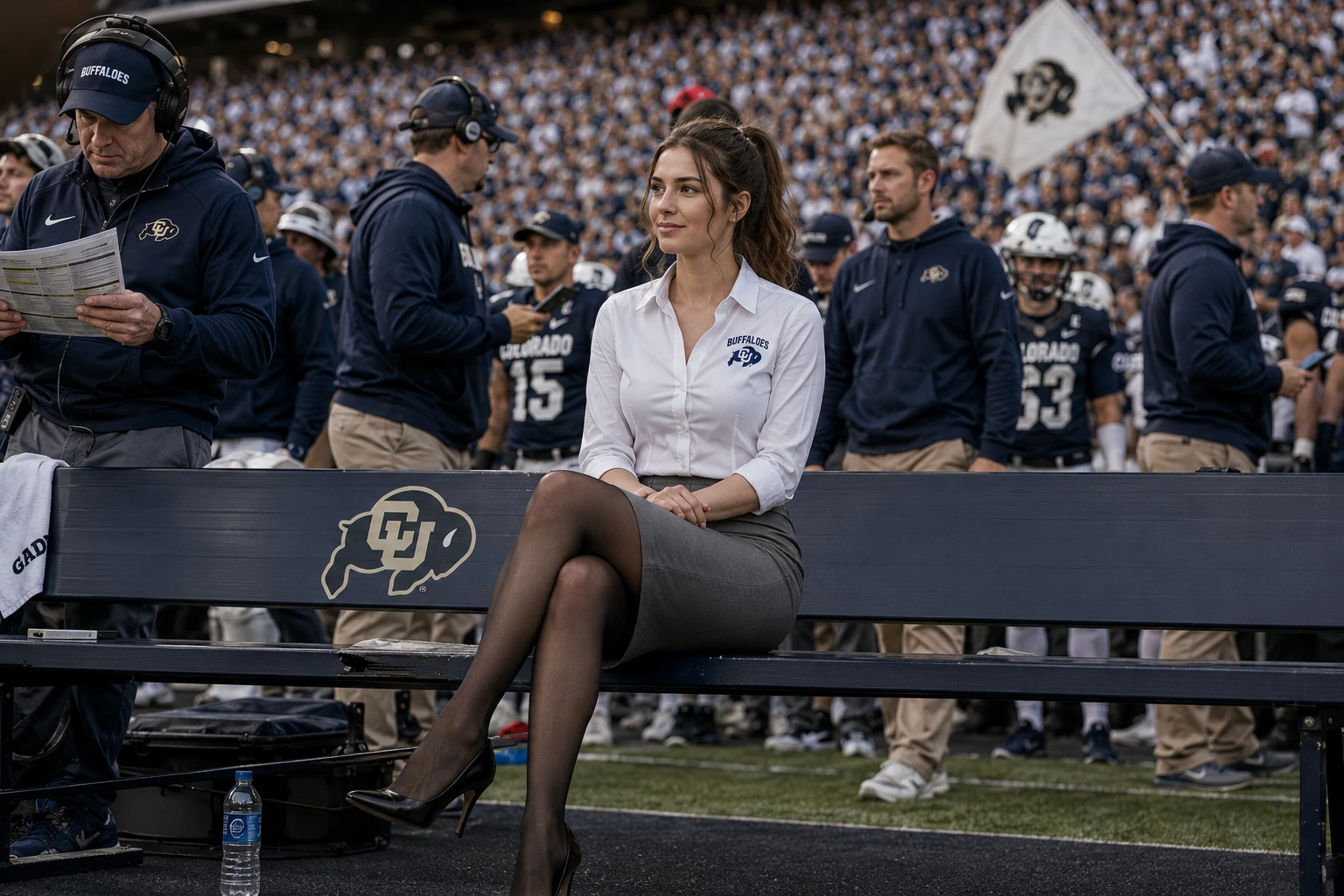
For months I’d watched her occupy the same seat on the Buffaloes’ sideline. The coaches had shouted into headsets, players had celebrated and argued, graduate assistants had sprinted from one end of the bench to the other carrying tablets and laminated call sheets. Emily had remained exactly where she always seemed to be, occasionally exchanging a quiet word with Coach Harper, occasionally offering the smallest nod, and for long stretches simply sitting with her hands folded as though she had nowhere else in the world she needed to be.
I had spent an embarrassing amount of time trying to understand what she contributed to a college football program.
By December I’d stopped expecting an answer.
“So,” I asked, “what will you remember about this season?”
She didn’t answer immediately.
Instead she looked across the empty practice field where a groundskeeper was painting fresh white lines that nobody would use for months.
“I think…”
She smiled to herself.
“Jacob smiles much more now.”
I searched my memory.
“Jacob?”
“The freshman receiver.”
“Oh.”
“He was terribly nervous in August.”
She paused, still watching the field.
“I don’t think he is anymore.”
There was nothing more to add. She seemed perfectly satisfied with the answer.
Most people in football remember seasons through games. The comeback against a conference rival. The missed field goal. The interception that changed everything. Emily had apparently measured the year by the confidence of a nineteen-year-old receiver who had finished with three touchdowns and fewer than two hundred receiving yards.
“What about the championship game?” I asked.
“Oh…”
She thought for another moment.
“It was very cold.”
“It was.”
“I liked seeing everyone share blankets afterwards.”
Again, she smiled.
“That was nice.”
It wasn’t the answer I’d expected, although by then I probably should have.
Emily had spent an entire season on one of the busiest sidelines in college football while somehow paying attention to things almost nobody else seemed to notice. Coaches remembered possessions. Reporters remembered turning points. Emily remembered people.
I closed my notebook.
“Well,” I said, “I still can’t explain what you do around here.”
She laughed, quietly enough that it almost disappeared in the winter wind.
“I know.”
“I’m sorry.”
“Don’t be.”
“I’ve had all season.”
“I know.”
There wasn’t the slightest trace of defensiveness in her voice. She sounded genuinely sorry that she couldn’t help me solve a puzzle I had created for myself.
“We’ll probably do this again next year.”
“I hope so.”
She gave a small wave and started walking towards the parking lot.
After only a few steps she stopped.
For a moment I thought she’d remembered something about football.
She turned back.
“Oh.”
“Yes?”
“Were the oatmeal cookies nice?”
I stared at her for a second before I remembered.
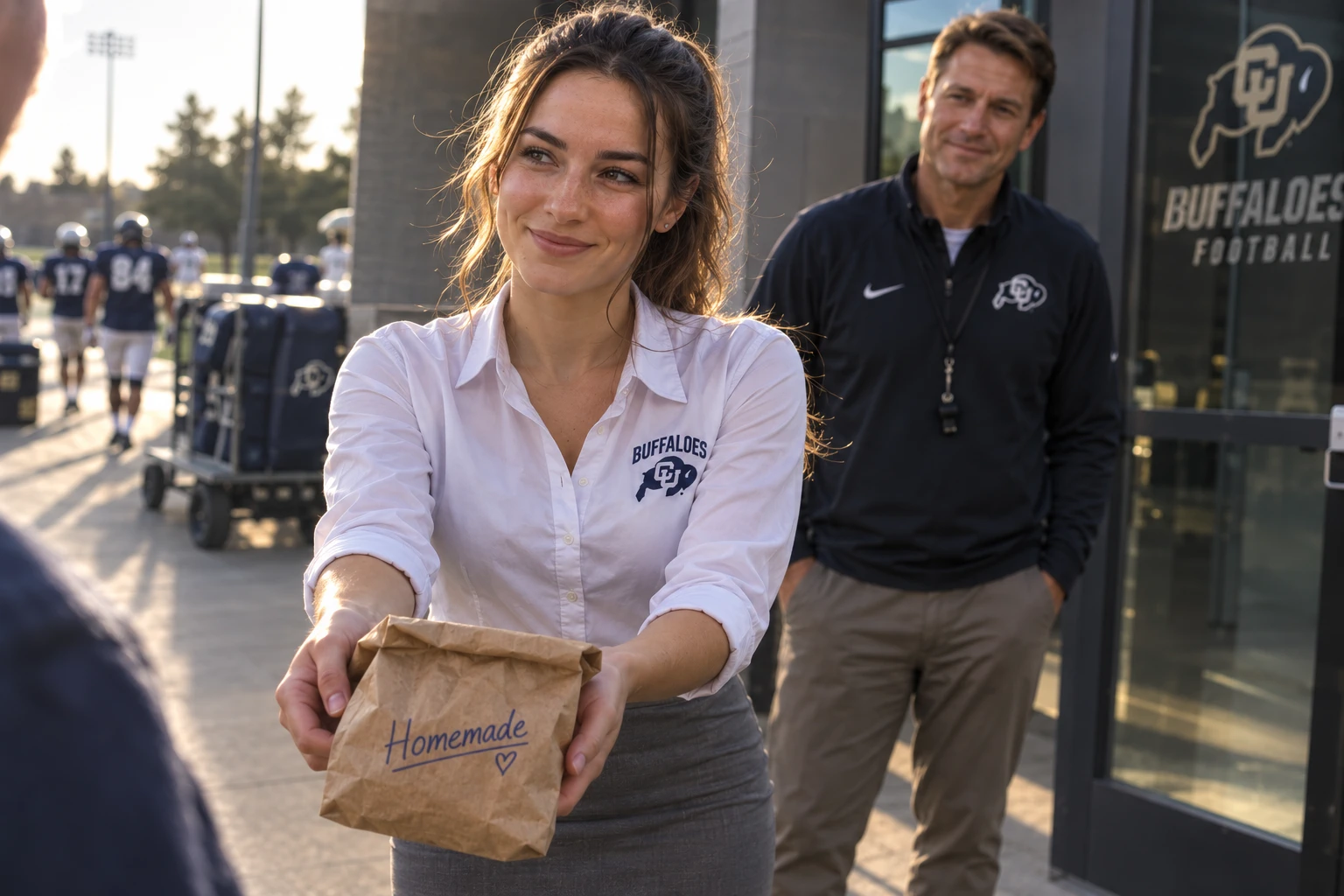
Weeks earlier, after one of my unsuccessful attempts to understand her place on the Buffaloes’ sideline, she’d pressed a small paper bag into my hands and explained that her mother had baked too many cookies.
“The cookies?”
She nodded.
“Mother wondered whether they were a little dry.”
I couldn’t help laughing.
“They were excellent.”
Her face brightened with unmistakable relief.
“Oh.”
“I’m so glad.”
“I’ll tell her.”
She gave another little wave before disappearing through the parking lot towards a small blue hatchback.
I stood there for another minute, notebook still in my hand.
Over the course of an entire football season I’d tried to understand Emily Ross by watching where she looked, when Coach Harper looked back, what players said about her and what role she might possibly occupy on one of the country’s most successful college football programs.
Emily, meanwhile, had apparently spent the same stretch of time wondering whether I’d enjoyed her mother’s oatmeal cookies.
For the first time all season, that felt like explanation enough.


Community notes
Join the conversation
Thoughtful contributions help keep Silverdale’s community conversations useful, welcoming and connected.
GRACE COMMUNITY
Thank you.
Your Community Profile could not be verified.
Comments become available after participation has been confirmed.